
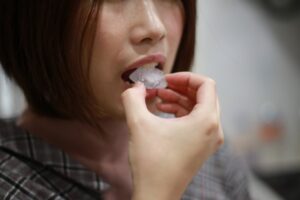
Many people enjoy crunching on the ice left at the bottom of a cold drink. It may seem like a harmless habit, but chewing on ice can take a serious toll on your teeth over time. Although tooth enamel is the hardest substance in the human body, it isn’t indestructible. Repeatedly biting down on hard ice can lead to dental problems that require professional treatment.
If you’re in the habit of chewing ice, here are 4 reasons it’s worth breaking.
1. It Can Crack or Chip Your Teeth
Ice may be made of water, but it’s surprisingly hard. Biting down on it creates a significant amount of pressure that your teeth aren’t designed to withstand.
Over time, chewing ice can cause tiny cracks in your enamel. In some cases, it can even chip or fracture a tooth, especially if you already have weakened enamel, large fillings, or dental restorations. Even a small crack can grow larger over time, potentially leading to pain, infection, or the need for more extensive treatment such as a dental crown or root canal.
Avoiding hard objects like ice is one of the easiest ways to protect your teeth from unnecessary damage.
2. It Can Damage Dental Restorations
If you have fillings, crowns, veneers, or other dental work, chewing ice can put those restorations at risk.
The force generated when biting hard ice may loosen a filling, chip a veneer, or crack a porcelain crown. Repairing or replacing damaged restorations can be both time-consuming and costly.
Protecting your dental work means avoiding habits that place excessive stress on your teeth, and chewing ice is one of the most common offenders.
3. It Can Increase Tooth Sensitivity
Repeated exposure to extremely cold temperatures, combined with the pressure of chewing ice, can aggravate sensitive teeth. If your enamel has become worn or your gums have receded, the cold may reach the inner layers of your teeth more easily, causing sharp discomfort.
In some cases, new sensitivity after chewing ice could be a sign of a small crack or another dental issue that requires attention.
If your teeth consistently hurt when eating or drinking something cold, it’s a good idea to schedule a dental examination to identify the cause.
4. It May Signal an Underlying Issue
For some people, chewing ice isn’t simply a habit – it’s a compulsion. Persistent cravings to chew ice, known as pagophagia, can sometimes be associated with iron deficiency anemia.
While not everyone who chews ice has a nutritional deficiency, it’s worth mentioning the habit to both your dentist and your primary healthcare provider if it becomes frequent or difficult to stop. Identifying and addressing any underlying health concerns can benefit both your oral and overall health.
Chewing ice may seem harmless, but the damage it can cause often develops gradually. Cracked teeth, broken restorations, increased sensitivity, and unnecessary dental expenses are all risks that can result from this common habit. If you enjoy the crunch of ice, try switching to chilled water without ice cubes or chewing sugar-free gum when the urge strikes. And if you think you’ve damaged a tooth or have noticed increased sensitivity, schedule a visit with your dentist.
About the Practice
Has chewing on ice or some other hard substance led to a cracked tooth? We can help if your tooth is damaged. With same-day emergency appointments available, multiple endodontic specialists under one roof, and a modern dental practice with state-of-the-art technology, our office is the place you want to be when you need prompt, expert care. Don’t delay, book your appointment online or call our New York office at (212) 737-6112.